




More and more Poles work abroad, take out loans from foreign banks or apply to foreign universities and scholarships. In all these situations, sooner or later one question arises: where to get the translation of tax returns? Below you will find a practical guide – without unnecessary jargon.
When is a tax return translation required?
PIT and CIT forms are official documents that are simply incomprehensible to foreign institutions without translation. The most common situations in which translation of tax returns becomes necessary are:
- Application for a loan or mortgage from a foreign bank – analysts must assess your income from recent years. Without a translated PIT form, they have no way to do it.
- Visa procedure to the USA, Canada, Great Britain or Australia – consulates often require confirmation of the applicant’s financial situation.
- Scholarships and student exchange programs – foreign universities ask for your parents’ financial documents or your own tax returns in English.
- Settlement of tax in the new country of residence – when moving abroad, you may need a Polish PIT form as proof of settlement in Poland to avoid double taxation.
- Employment or cooperation with foreigners – the HR department or accounting office needs forms in a language understandable to the employee.
Which tax forms are most often translated?
Translation of tax returns mainly concerns:
| Form | What it covers |
|---|---|
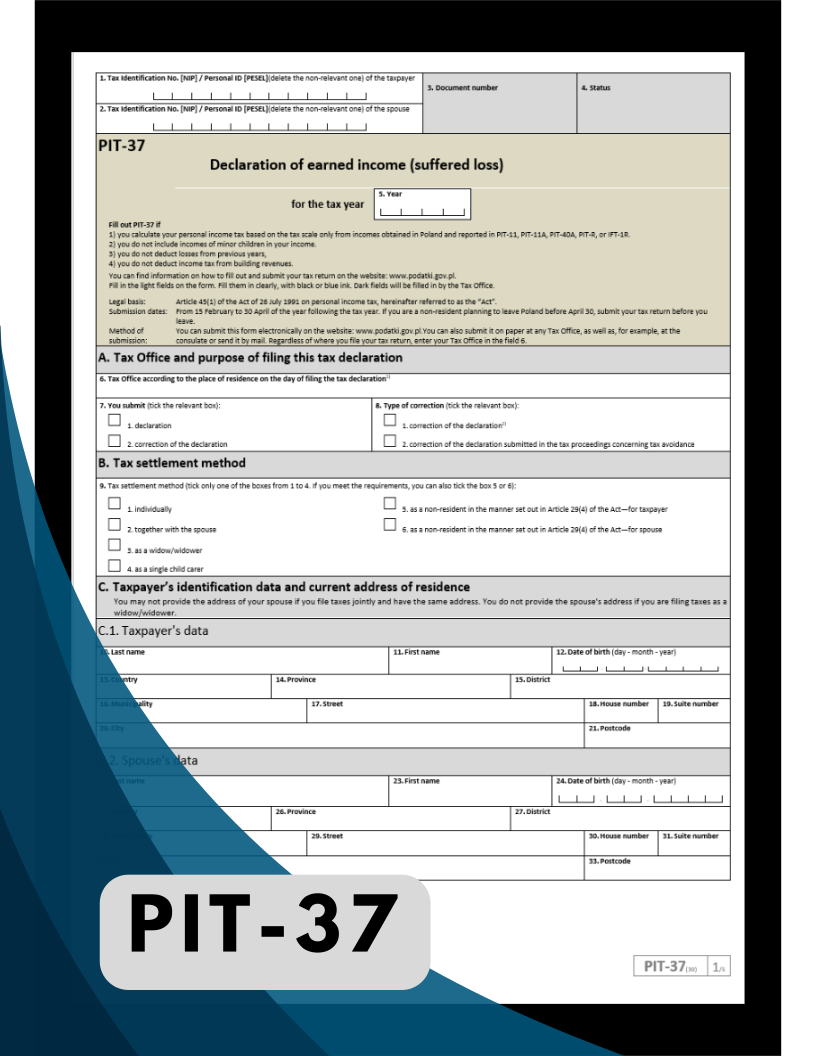
| PIT-37 | Income from employment contracts, mandate contracts, specific work contracts |
| PIT-36 | Business activity on general terms |
| PIT-36L | Activities taxed with a flat tax |
| PIT-36LS | Recorded lump sum (from 2022, shortened version) |
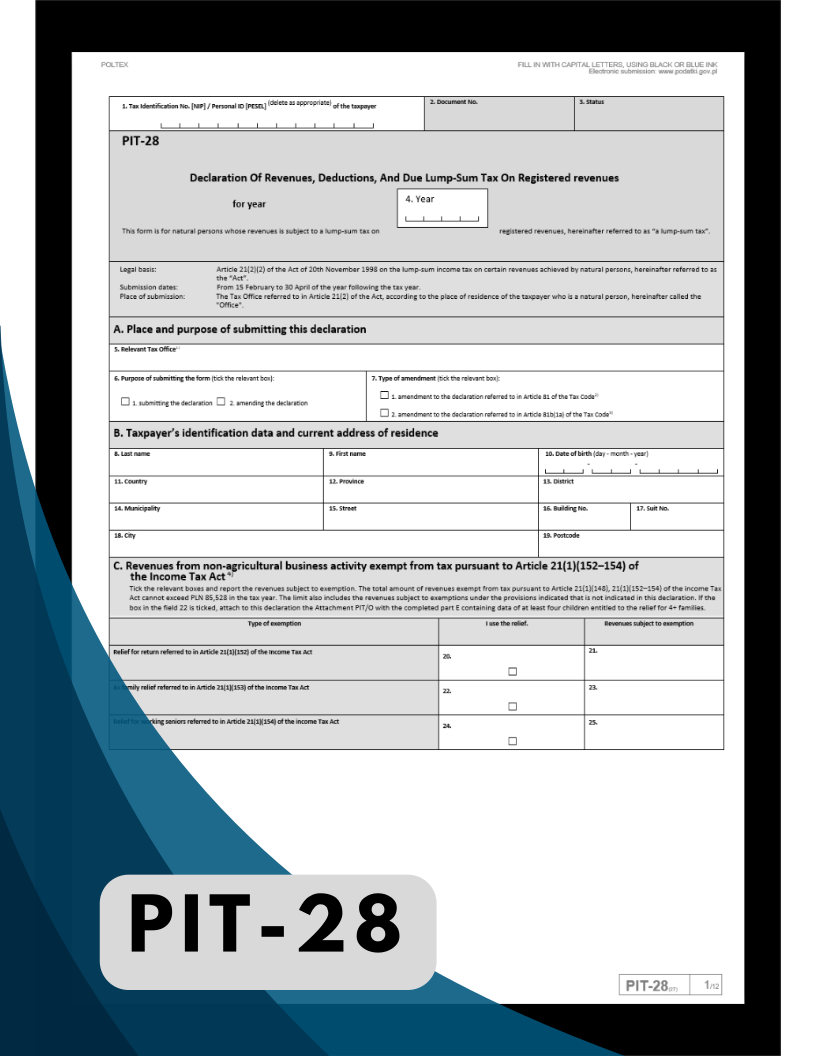
| PIT-28 | Lump sum – full version |
| PIT-38 | Profits from the stock market and securities |
| PIT-39 | Real estate sales |
| CIT-8 | Company’s annual return (corporate income tax) |
Each of these forms may include attachments: PIT/B (business activity), PIT/O (reliefs), PIT/ZG (foreign income) and others.
Regular and sworn translation – what to choose?
This question comes up every time and it’s worth knowing what the difference is.
An ordinary translation (other names are uncertified translation, non-sworn translation) is sufficient in most everyday situations: when an employer abroad wants to understand your earnings, when the university needs indicative data, or when you want to check what is really in the form completed by the accounting office.
A sworn (certified) translation is required when the document has legal force before a foreign office, court or bank. They are performed by a translator entered on the list of the Minister of Justice and stamped and signed.
Does TaxFormLab perform sworn translations? No – our specialty is ready-made, editable translations of tax forms, including: in English and German versions (DOCX + interactive PDF), which you can use many times. However, if you need a sworn translation of a completed tax return, you can also use our forms and then have them certified by the appropriate person. We will be happy to advise you where to apply – write to us and we will show you a proven solution.
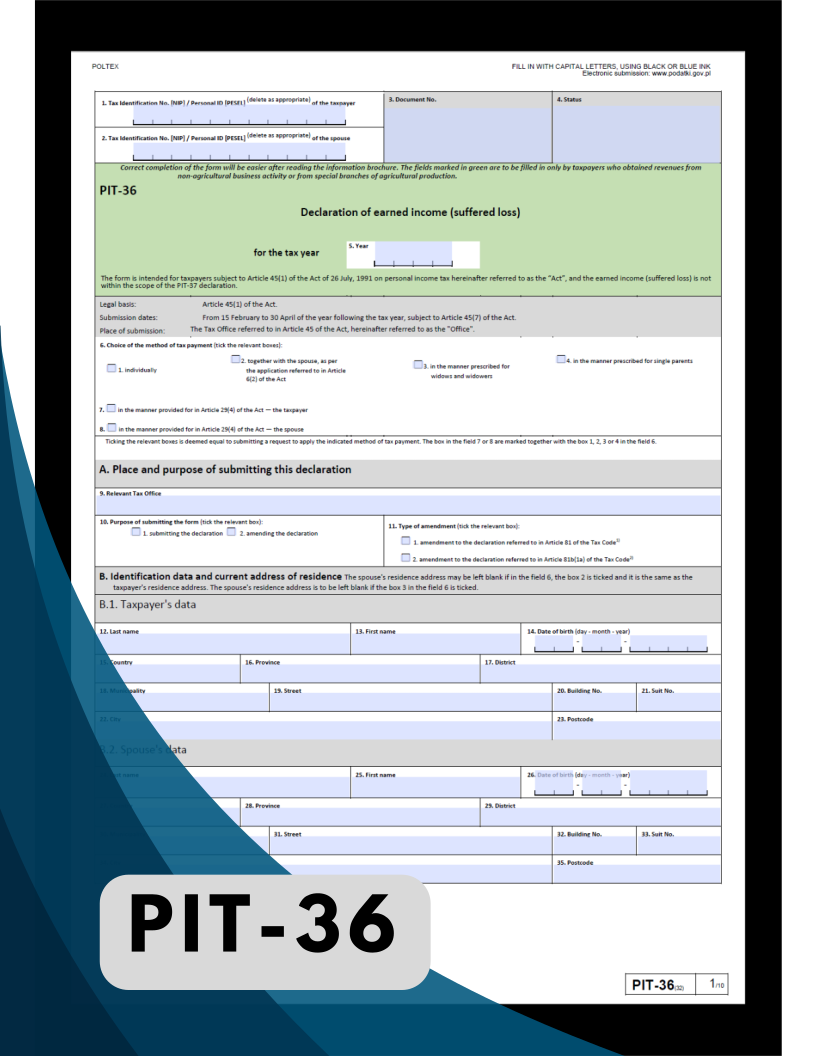
Oferta TaxFormLab
TaxFormLab offers: a ready-made form template translated into English or German that you can fill out yourself (or together with a client/employee) as many times as you need. It’s the perfect solution for:
- accounting offices and human resources departments serving foreigners – instead of ordering a translation every time, you have a ready form at hand,
- sworn and ordinary translators – the translated template is an excellent starting point and verification of your own terminology skills,
- companies employing foreign workers – you can show them the form in their language and help them understand what they are filling out.
What should you pay attention to when translating tax returns?
A tax form is not just plain text – it is a precise legal document. A few things to check whether you do it yourself or outsource:
- Current version of the form. PIT-37 for 2024 is different from PIT-37 for 2022. Make sure that the translation corresponds to the version (number) that appears on the original.
- Tax terminology. Words such as “tax advance”, “taxable income” or “pro-family relief” have precisely defined equivalents in English – an incorrect translation may mislead a foreign institution.
- Structure compliance. A good translation retains the numbering of fields and the arrangement of tables so that the recipient can easily compare the Polish and foreign-language versions.
- Document form. Do you need an editable DOCX file (to enter data), an interactive PDF (to be filled out directly in Acrobat), or a printout ready to be signed by a sworn translator?
Frequently asked questions
Does the translation of a tax return have to be sworn?
It depends on the institution – and unfortunately there is no single rule. It is different in banks: one will accept a regular translation, another will require a sworn form, and still another will be satisfied with a copy with a working translation attached to the application. It is always worth asking in advance before incurring the cost of a sworn translation. Offices usually require a certified form, but there are exceptions – so the first step should be to check the requirements of a specific institution.
The good news: even if it turns out that you need a sworn translation, you can download a ready-made form from TaxFormLab, fill it in with your details and give it to a sworn translator for certification purposes only – instead of commissioning the translation from scratch. It’s faster and often cheaper. If you don’t know how to go about it – we can advise you, write to us.
How much does it cost to translate a tax return?
Prices for sworn translators usually range from several dozen to several hundred zlotys per form, depending on its length and processing method. Ready-made TaxFormLab templates are a one-time purchase that you can use many times.
How long does it take to receive a sworn translation?
Standard time is 2-3 business days. If you choose a ready-made form, you have it immediately at a fraction of the price.
Can I translate PIT myself?
Technically – yes. Practically, the risk of terminological errors is high. The ready-made template from TaxFormLab minimizes this risk and allows you to focus on entering data, not on searching for appropriate terms.
Podsumowanie
Translation of tax returns is a service whose demand is growing with the mobility of Poles and the internationalization of Polish companies. The key question is always: what is the document intended for? If informational translation or a ready-made template is all you need – TaxFormLab has what you need. If you need a sworn translation with the translator’s stamp, contact us and we will help you find the right solution.
Check out our ready-made translations of PIT and CIT forms in English and German → [Go to store]